
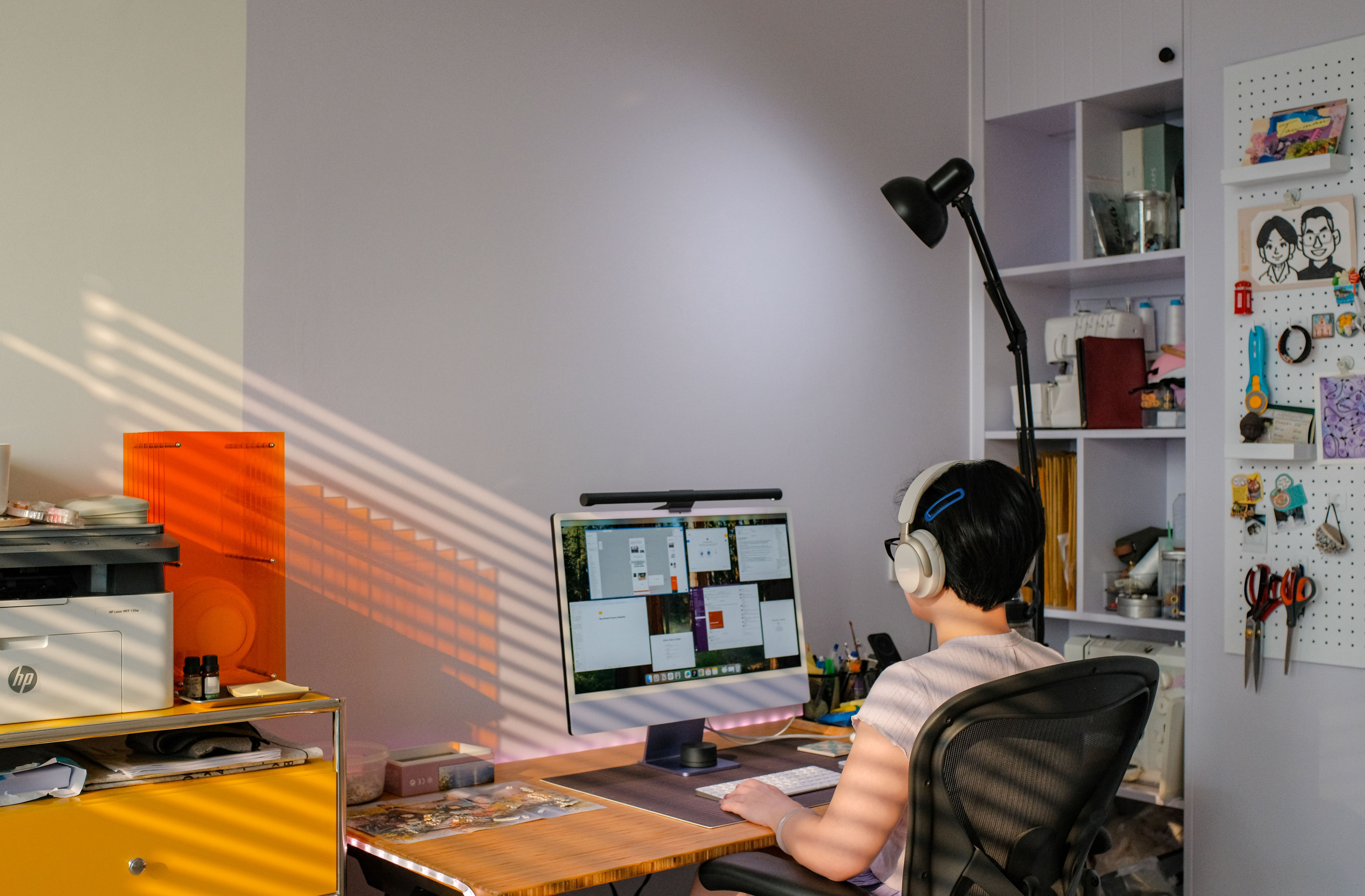
Quick Answer: Working from home in a studio apartment is doable when you treat your desk as its own zone, not just a table by the couch. Pick one dedicated corner, invest in furniture that folds away or does double duty, and set boundaries around when the laptop closes for the night. A studio isn't a downgrade if the workspace is built with intention.
Working from home in a studio apartment means your bedroom, living room, and office often share the same four hundred square feet. That's not a dealbreaker. With the right corner, a few multi-use pieces, and firm habits around when work stops, a one-room layout can carry a full workday just as well as a house with a spare bedroom. At Gruene Pointe Apartments, residents balance remote work with New Braunfels river-town living every day, and a well-planned home office setup makes that easier.
What Makes Working from a Studio Apartment Different?
A studio apartment puts your desk, bed, and kitchen inside one open room, so a laptop left open at 9pm sits a few feet from where you sleep. Without a separate door to close, the distance between work and rest becomes a matter of design rather than square footage. That shift changes how you think about furniture, lighting, and daily routine.
Why Boundaries Matter More Than Square Footage
Remote work isn't a fading trend. Nearly 22% of U.S. workers still did some of their job from home in 2025, according to Census Bureau survey data, and the Census Bureau's own figures show the share of people who usually work from home more than doubled between 2019 and 2023, from 5.7% to 13.8%. Most of those workers aren't doing it from a private office down the hall. A closed laptop and a consistent start time do more for focus than an extra 200 square feet ever could.
The usual complaints about studio work life are predictable: video calls that pick up kitchen noise, a desk that slowly turns into a laundry pile, and the awkward moment when a friend stops by while you're still on a call. None of these are space problems. They're habit problems, and they show up in a three-bedroom house too if nobody sets rules for the room. Treat the desk area like a small office with its own start and end time, and the rest tends to sort itself out.
How Do You Set Up an Apartment Home Office in a Small Space?
Start with light and outlets, not furniture. Face your desk toward a window if you can, since natural light cuts eye strain and helps signal daytime hours in a room that's also your bedroom. From there, pick one wall or corner and commit to it as the only workspace, so the rest of the studio stays living space.
- Anchor the desk in a corner or against an underused wall, not the center of the room
- Choose a compact studio apartment desk with drawers instead of stacking supplies on open shelves
- Add a floor lamp or LED task light so the space feels different from the rest of the apartment after dark
- Keep a power strip within reach so cords don't cross walking paths
A fold-down desk mounted to the wall disappears when you're done for the day, which matters if your studio apartment desk doubles as a dinner table on weekends. Renters who want their apartment office to feel less makeshift often add a room divider or a bookshelf turned sideways, so the desk chair faces away from the bed. None of this requires drilling into walls, since most of these pieces are freestanding.
Ergonomics matter just as much in 300 square feet as they do in a corner office. A laptop stand that lifts the screen to eye level, a separate keyboard, and a chair with real lumbar support prevent the neck and wrist strain that creeps in after a few months of hunching over a coffee table. None of it needs to be expensive. A stack of books under a laptop does the same job as a $60 riser on day one.
Small routines beat big purchases, every time.
Work From Home Set Up Ideas That Actually Save Space
Not every small-space solution earns its square footage. Some pieces look clever in photos but eat up more room than a plain desk would. The comparison below breaks down four popular work from home set up ideas for studios, so you can match the option to how much floor space you're actually working with.
| Setup | Space Needed | Best For |
|---|---|---|
| Wall-mounted floating desk | About 2 sq ft when folded down | Studios under 400 sq ft |
| Freestanding ladder desk | 6 to 8 sq ft, no drilling required | Renters who want zero wall damage |
| Repurposed dining table | Uses existing furniture | Studios without a spare corner |
| Rolling cart workstation | Tucks into a closet | Most flexible, works in any studio layout |
Furniture solves half the problem. The other half is habit. Some of the best ways to work from home in a studio come down to timing rather than gear: start at the same hour each day, take real breaks away from the desk, and physically close the laptop when the workday ends. These home office productivity tips cost nothing, and they matter more than a $300 chair.
Frequently Asked Questions
1. What's the Best Office Space Apartment Setup for One Person?
For one person, the best office space apartment setup is usually a corner desk facing a window, paired with a chair that slides fully under the desk when it's not in use. Anything larger starts competing with the bed or the kitchen table for floor space, which defeats the point of keeping things simple.
2. What's the Best Studio Apartment Desk for a Small Room?
The right studio apartment desk depends on the room's shape, but a few formats consistently work well in small footprints:
- Wall-mounted folding desks for rooms under 400 square feet
- Narrow console desks that double as an entry table
- Corner desks that tuck into unused angles
- Desks with built-in drawers, so supplies don't need a separate shelf
3. What Work From Home Tips Help With Video Calls in a Studio?
Face the camera toward a wall or curtain instead of the kitchen or bed, keep a small clip light behind the laptop for even lighting, and wear headphones so sound from the rest of the apartment doesn't bleed into the call. A folding screen behind the desk also keeps the background consistent, call after call.
4. Do I Need a Standing Desk in a Studio Apartment?
Not necessarily. A standing desk converter that sits on top of an existing desk gives most of the benefit without adding a second piece of furniture. It's worth the cost if you're at the desk more than five or six hours a day and don't have room to walk around during breaks.
5. Is It Worth Renting a Coworking Space Instead of an Office Apt?
It depends on how often you need quiet or a change of scenery. Many renters skip the added monthly cost by using on-site amenities instead. At Gruene Pointe, the community amenities include a dedicated co-working space, which covers most of what a paid membership offers.
Turning a Studio Into a Workspace That Actually Works
Working from home in a studio apartment comes down to two things: a desk that earns its footprint and habits that protect your evenings. Get those right, and a one-room layout stops feeling like a compromise. If you're hunting for a studio built with a home office in mind, check out the available floor plans at Gruene Pointe, near Gruene and downtown New Braunfels.