
Quick Answer
A micro-apartment is a small, self-contained rental unit, typically between 150 and 400 square feet, designed to maximize function in a minimal footprint. Common in dense urban areas, they feature space-efficient layouts with built-in storage, convertible furniture, and combined living and sleeping areas. They're popular with young professionals, students, and urban renters prioritizing location over space.
Introduction
Apartment sizes keep shrinking in America's major cities — and that's not a mistake. The rise of the micro-apartment reflects a real shift in how people live, work, and spend money on housing.
If you've seen listings for units under 400 square feet and wondered whether they're actually livable, this guide is for you. We'll cover exactly what a micro-apartment is, what to expect inside one, and how to decide if small-space living matches your lifestyle.
What Is a Micro-Apartment? (Definition)
A micro-apartment is a self-contained residential unit with a total floor area typically between 150 and 400 square feet. Unlike a traditional studio — which averages 400–600 square feet — a micro-unit is intentionally minimal, with every square inch designed to serve multiple functions.
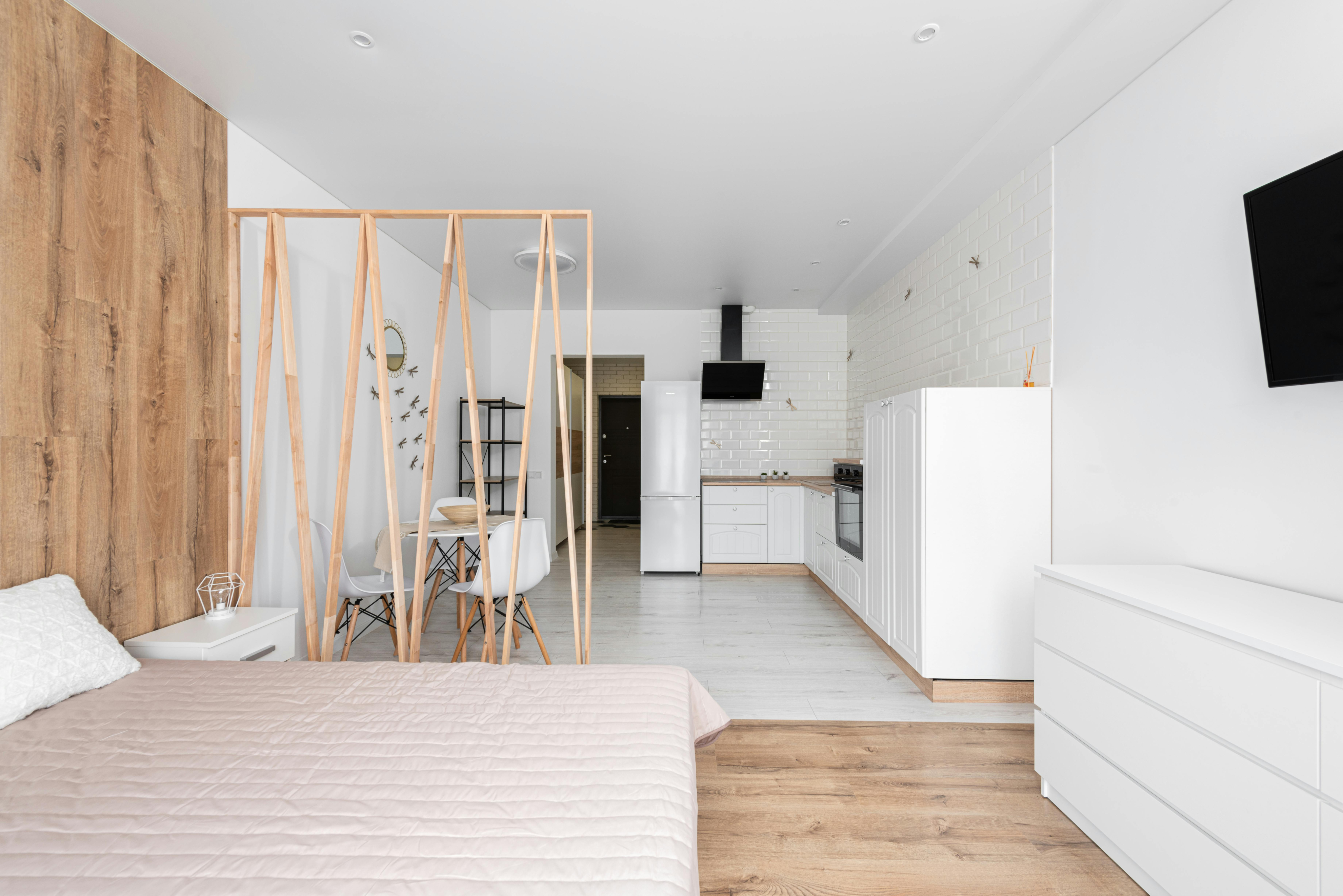
These units almost always include a small kitchen or kitchenette, a bathroom, and a combined sleeping and living area. Many feature built-in furniture, murphy beds, fold-out tables, and wall-mounted storage that disappear when not in use.
How Micro-Apartments Differ from Studios and Regular Apartments
| Unit Type | Typical Size | Separate Bedroom | Built-In Furniture | Common In |
|---|---|---|---|---|
| Micro-Apartment | 150–400 sq ft | No | Usually yes | Dense urban areas |
| Studio | 400–600 sq ft | No | Rarely | Cities, suburbs |
| 1-Bedroom | 550–900+ sq ft | Yes | No | All markets |
| Efficiency Unit | 200–450 sq ft | No | Sometimes | Urban/college towns |
Micro-apartments are smaller than studios, but the key difference is intentional design. Studios often feel cramped when they're small. Micro-units are engineered to not feel that way.
Still deciding between space options? See: Studio vs. 1-Bedroom Apartment: Which Is Better for a First-Time Solo Renter?
Where Are Micro-Apartments Most Common?
Micro-apartments are primarily a feature of high-cost, high-density housing markets. You'll find the highest concentrations in:
- New York City — particularly Manhattan and parts of Brooklyn
- San Francisco and the Bay Area
- Seattle, where the city approved smaller minimum unit sizes in recent years
- Boston, Chicago, and Washington D.C.
- College towns and university districts across the country
They're most common where demand for central locations is high and land is expensive. The trade-off is: less space, but better access to transit, restaurants, and jobs.
What to Expect Inside a Micro-Apartment
Space-Efficient Features You'll Typically Find
- Murphy beds or loft beds that fold up to free daytime floor space.
- Convertible sofas or daybeds that serve as both seating and sleeping areas.
- Fold-out or wall-mounted dining tables.
- Built-in shelving, under-bed storage drawers, and custom closet systems.
- Compact appliances: two-burner cooktops, counter-depth refrigerators, combination washer/dryers.
What You Might Not Find
- Full-size kitchen with standard oven. Many micro-units use microwave/convection combos.
- A separate living room area.
- Walk-in closets or dedicated laundry.
- Space for a home office setup — though a desk nook is often built in.
Step-by-Step: How to Decide If a Micro-Apartment Is Right for You
- Measure your current living habits: how much floor space do you actually use day-to-day?
- List everything you own — then decide honestly what you'd need to donate or store.
- Consider your work life: do you work from home often? A micro-unit might feel confining.
- Calculate your budget: compare micro-unit rent with studios in the same area.
- Visit a micro-apartment in person before signing — square footage photos are misleading.
- Check building amenities: gyms, coworking lounges, and rooftop spaces often compensate for smaller units.
- Try “micro living” for a short-term rental first if you're unsure about the commitment.
Pros and Cons of Micro-Apartment Living
Advantages
- Lower rent in desirable, central locations.
- Lower utility costs due to smaller heating/cooling footprint.
- Forces intentional, clutter-free living.
- Usually in walkable, transit-accessible neighborhoods.
- Easier and faster to clean.
Drawbacks
- Limited space for entertaining, guests, or overnight visitors.
- Can feel claustrophobic without natural light and good ventilation.
- Storage is genuinely limited — you'll need to downsize.
- Not ideal for remote workers who need a dedicated, distraction-free office.
- Resale or rental value comparisons are harder when upgrading.
Mistakes to Avoid When Renting a Micro-Apartment
- Signing a lease without visiting in person. Photos always make spaces look larger.
- Forgetting to ask about building storage, bike rooms, or co-working spaces.
- Bringing oversized furniture from a previous, larger apartment.
- Ignoring natural light — a dark micro-unit is genuinely difficult to live in.
- Not accounting for parking. Read: Garage vs. Covered Parking in Apartments
How to Make the Most of a Micro-Apartment
- Use light colors on walls and furniture to visually expand the space.
- Go vertical: wall-mounted shelves, tall bookcases, and hanging storage maximize unused height.
- Keep only what you use regularly. Seasonal or rarely used items belong in building storage.
- Invest in quality multi-use furniture: ottomans with storage, beds with drawers, expandable tables.
- Use mirrors strategically to reflect light and make rooms feel larger.
FAQ: Micro-Apartments
How small is too small for an apartment?
Most renters find units under 200 square feet genuinely difficult to live in long-term unless the layout is exceptionally efficient. Between 250 and 400 square feet is manageable for one person with minimal belongings, especially with quality built-in storage and natural light.
Are micro-apartments cheaper than studios?
Generally, yes — micro-apartments are cheaper in absolute monthly rent. However, on a per-square-foot basis, they can actually be more expensive, since you're paying a premium for a central, in-demand location. Always compare the cost per square foot when evaluating value.
Can you comfortably work from home in a micro-apartment?
It's possible but challenging. Many micro-units include a built-in desk nook, but without a dedicated room for work, the boundaries between work and rest can blur. If you work from home full-time, a studio or 1-bedroom is likely a better fit.
Do micro-apartments come furnished?
Many do. Purpose-built micro-apartment buildings often include built-in or integrated furniture — murphy beds, fold-out tables, wall storage — as part of the unit design. Always confirm what's included in the lease before assuming a unit comes furnished.
Are micro-apartments a good option for couples?
Rarely. While a single person can adapt to 300–400 square feet, two people sharing the same space full-time can find it genuinely stressful. Most micro-apartment buildings are marketed to and designed for solo renters.